

I used to be the Scrum Master that the executives ignored.
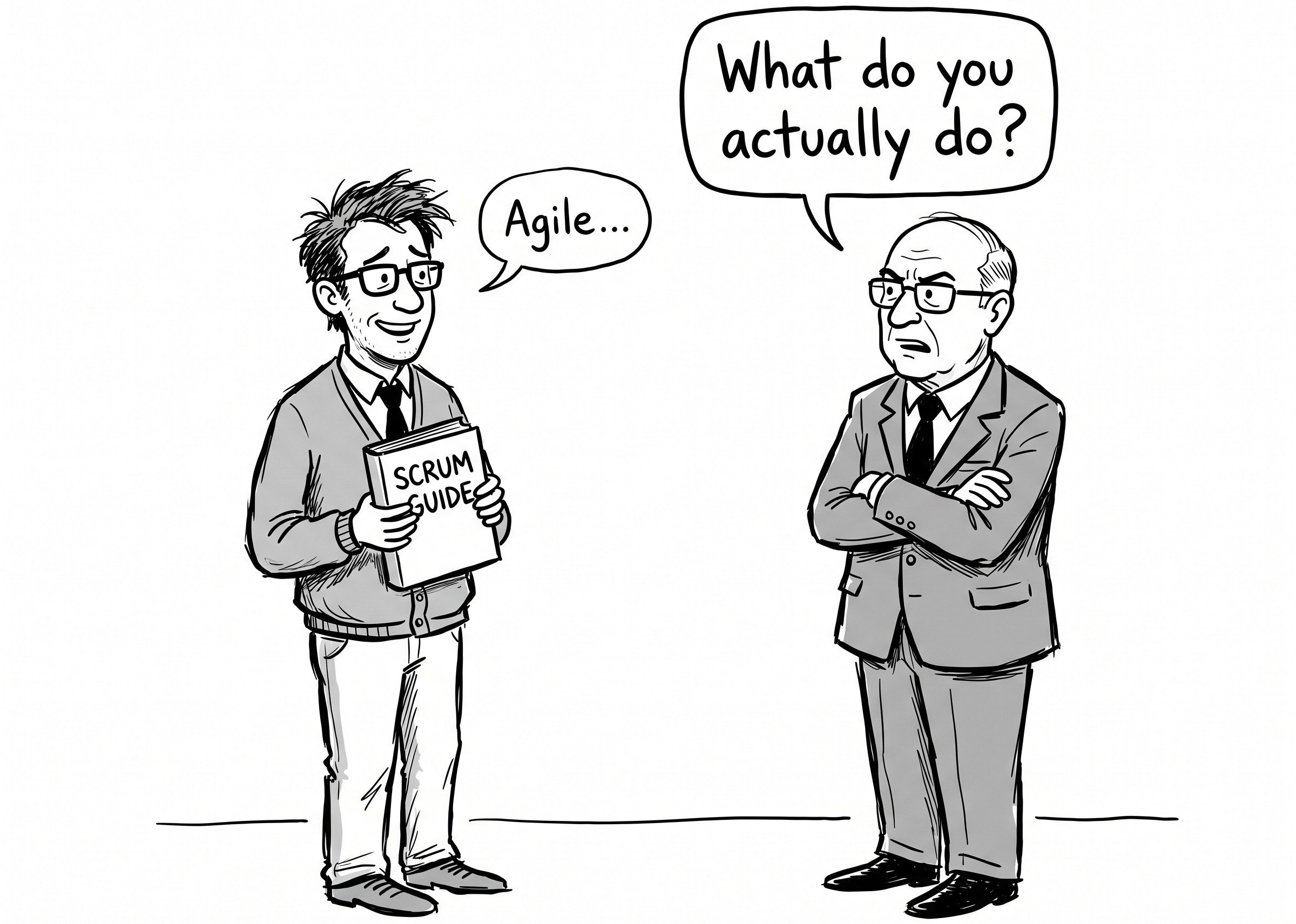
I genuinely believed that showing executives I knew Agile would earn their respect.
Then, in a meeting after a quarterly review, one of the SVPs pulled me aside and asked:
“I still don’t know what you actually do.”
As a new Scrum Master, I was quite impulsive, so I replied:
“I need to explain the framework better. I need to help the team understand Agile.”
Now… I don’t think I need to tell you what happened next.
I didn’t get the next question. The executive dropped the conversation and walked away.
That’s why I cringe now when I see new Scrum Masters walking into executive meetings armed with Agile vocabulary and walking out wondering why no one takes them seriously.
Let me be clear.
Knowing your Scrum matters.
But!
Agile fluency is not the same as executive credibility. And confusing the two is one of the most expensive mistakes a new Scrum Master can make.
After years of working alongside executives across banking and tech, I learned that credibility in this (or “any”) role is not granted. It is built through a specific set of behaviours that have almost nothing to do with how well you know the Scrum Guide.
In this post, I’ll share 7 such behaviours.
Because if someone who once bored executives into silence can learn to become the person they actually rely on, so can you.
Let’s get started.
Got an urgent question?
Get a quick answer by joining the subscriber chat below.
