
How do I create more ART-level collaboration when teams work in isolation?
A guide to SAFe collaboration

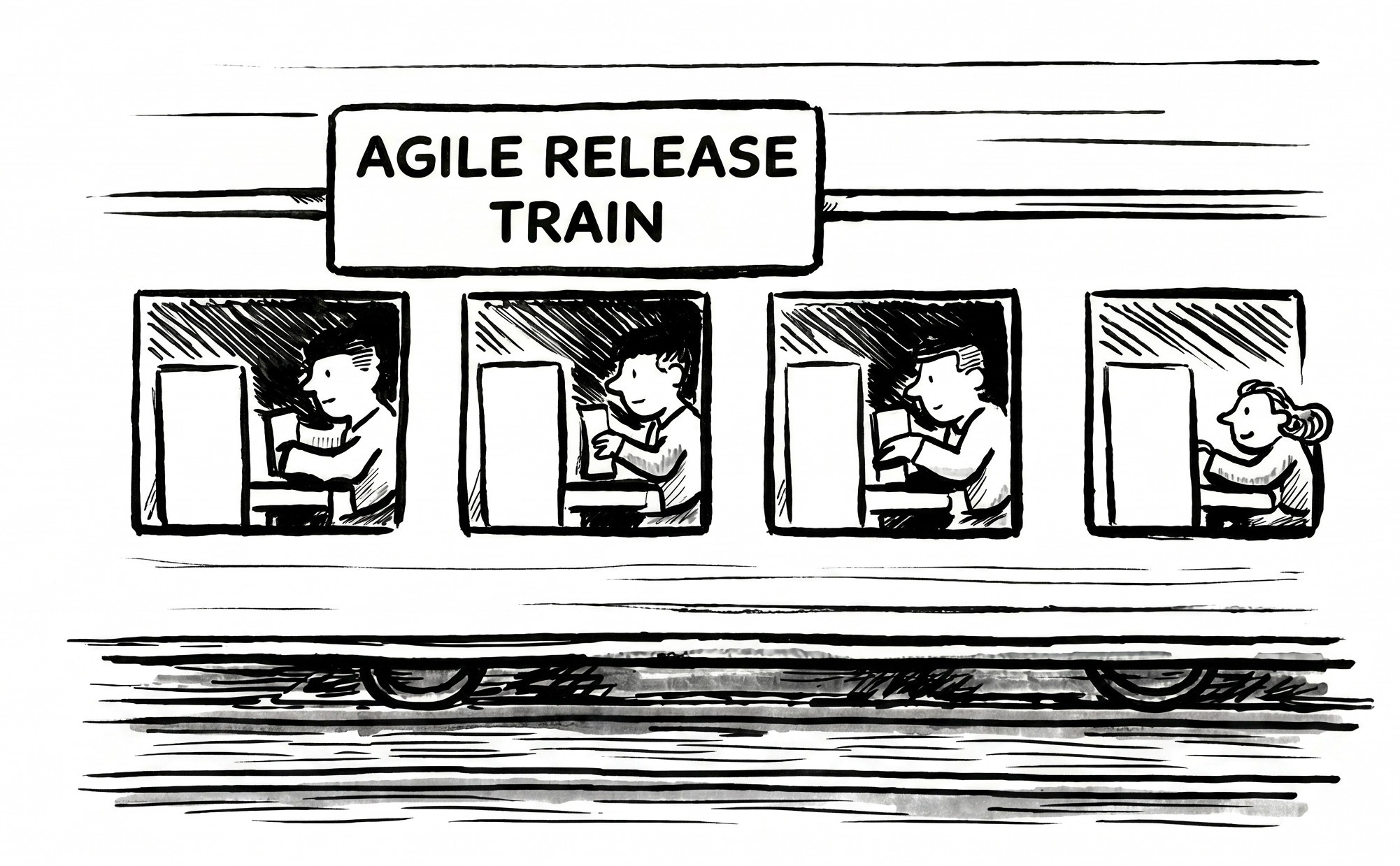
A Scrum Master recently asked me a question that many people working in SAFe or multi-team environments will recognize:
“Hi Vibhor, even though we are part of one ART, teams mostly work in isolation. They have their own priorities, their own ways of working, and limited collaboration with other teams. When cross-team issues come up, people say, ‘That’s not our scope.’ How do I create more ART-level collaboration?”
This is a very genuine problem.
Many Agile Release Trains are designed as a single train in theory, but they do not always behave as such in practice. Teams attend the same PI Planning. They share the same calendar of ART events. They even report progress through the same tools. But day-to-day, they operate in silos.
Each team has its own backlog, Product Owner, priorities, pressure, stakeholders, and way of working. Over time, the team boundary becomes stronger than the ART identity.
So when a problem appears between teams, the first response is not always, “How do we solve this together?”
It is often:
“That is not our scope.”
And that one sentence tells us a lot about the system.
The problem is that we've given our teams autonomy without giving them a shared purpose large enough to make collaboration feel worth it. And that's a structural problem disguised as a cultural one.
For my own clarity, if nothing else, I want to work through this question carefully, pulling in the frameworks, thinkers, and concrete practices I've found most useful. I've organized this from the most foundational problem to the most actionable fix. If you've navigated this yourself and have something to add, I'd genuinely love to hear it.
Let’s get started.
Got an urgent question?
Get a quick answer by joining the subscriber chat below.
