
Which Agile Meetings Should Actually Be In Person and Which Can be Remote?
A practical decision matrix for choosing in-person, remote, or hybrid Agile meetings without excluding part of the team

Q: Hi Vibhor. I am an Engineering Manager for a Scrum team. I need your advice on something. My team is hybrid, and we keep debating which Agile meetings should happen in person. Some team members want Sprint Planning, Retrospectives, and refinement sessions on-site because the conversations are more engaging, while others feel excluded when joining remotely. How should I decide which meetings should be in person, remote, or fully virtual without creating an unfair experience for part of the team?
Thank you for the question.
Most hybrid teams decide when people should come to the office. But what they don’t do is decide what they need to accomplish in those meetings.
Here’s what happens:
The team selects two or three office days
Everyone rearranges their schedule and commutes
Then they spend half the day joining video calls
Meanwhile, the retrospective where the team needs to discuss a difficult conflict takes place with six people in a room and two people struggling to participate remotely.
Many believe the issue with Agile teams is too many remote meetings, but the actual problem is that teams often don't align the meeting format with the purpose of the work.
Some meetings benefit from physical proximity.
Others work just as well remotely.
Some should not be meetings at all.
And mixed-location meetings, where some people share a room while others join remotely, often create (as research shows) the worst experience of the three.
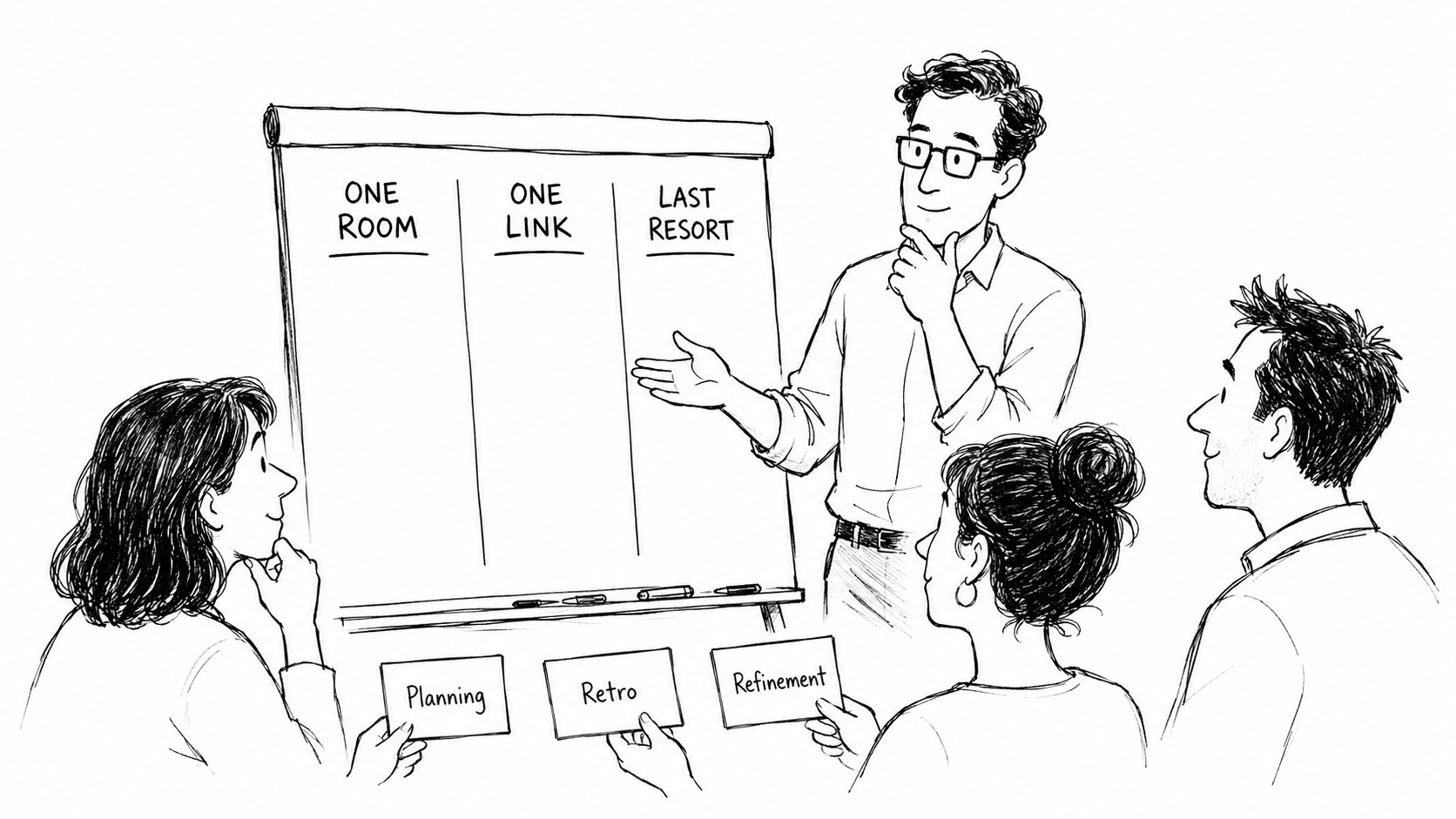
In this post, I will provide a Meeting Format Decision Model you can use to choose among in-person, fully remote, and hybrid meetings for each Agile event and other meetings.
Let’s get started.
Got an urgent question?
Get a quick answer by joining the subscriber chat below.
