
Why CoPs usually don't work
The reason your Community of Practice isn't working has nothing to do with how many people attend.

Q: Hi Vibhor, I am a Release Train Engineer and we started Scrum Master and PO Communities of Practice, but attendance is irregular and the discussions are not very impactful. People say they are too busy. When they do attend, the conversations are updates rather than shared learning. How do I make CoP valuable and self-sustaining?
Thank you for the question.
Most Communities of Practice start with good intent. Someone creates a calendar invite, names the group, adds the Scrum Masters and POs, and then waits for learning to emerge.
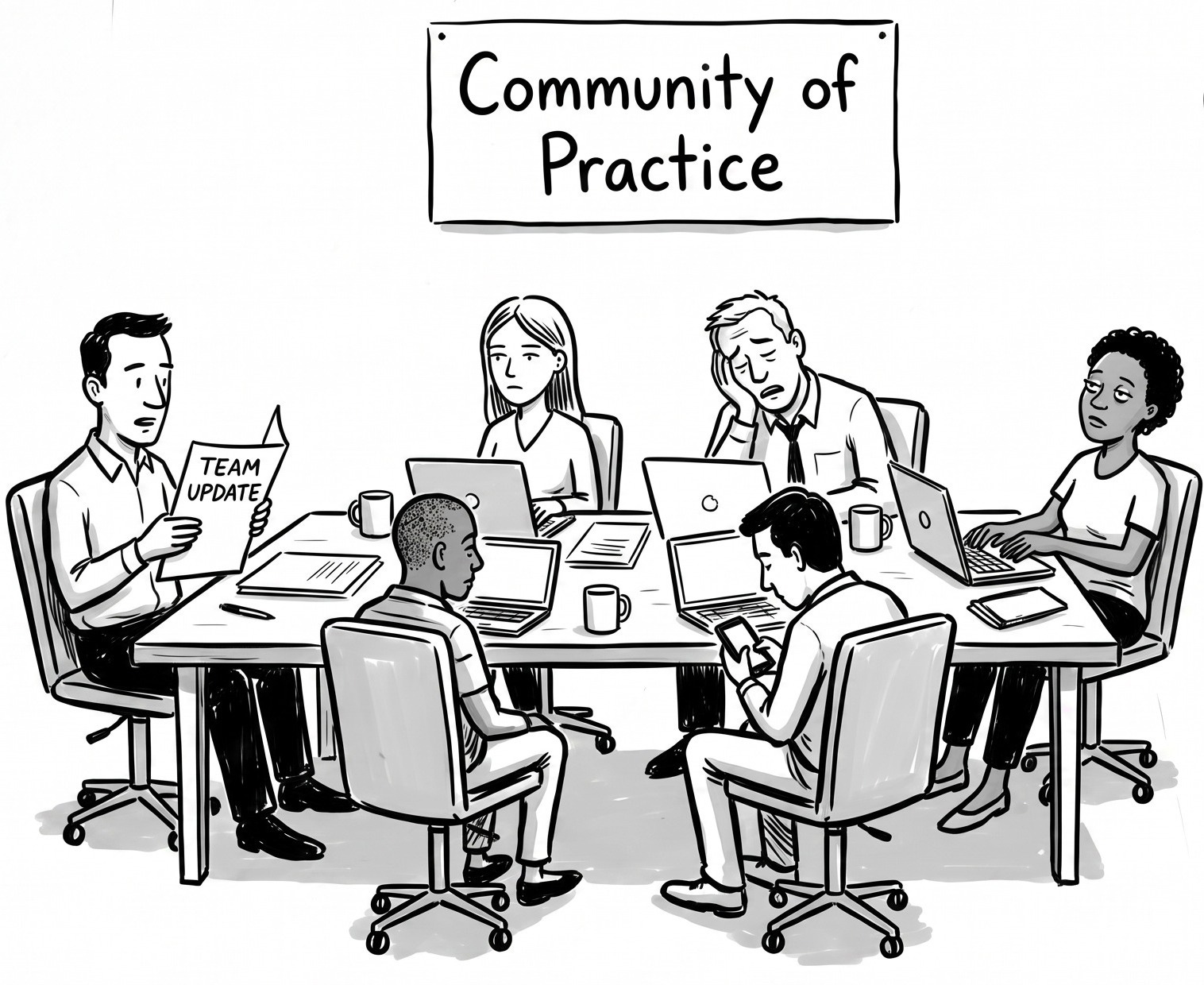
But this is NOT enough to make a Community of Practice valuable.
A Community of Practice becomes valuable when people feel (not think, FEEL):
“This helps me solve MY problems.”
“I learn things here that I can use immediately.”
“People like me are dealing with similar challenges.”
“This is not another status meeting.”
“I have a reason to come back.”
If your Scrum Master and PO CoP have irregular attendance and low-impact conversations, the issue is usually how you have designed that CoP.
The community has probably become a meeting rather than a community.
I have a few suggestions on how to fix this.
Let’s get started.
Got an urgent question?
Get a quick answer by joining the subscriber chat below.
