
Scrum Master Skills in 2026 and Beyond
What to Learn more of as AI takes over more of your Agile work?

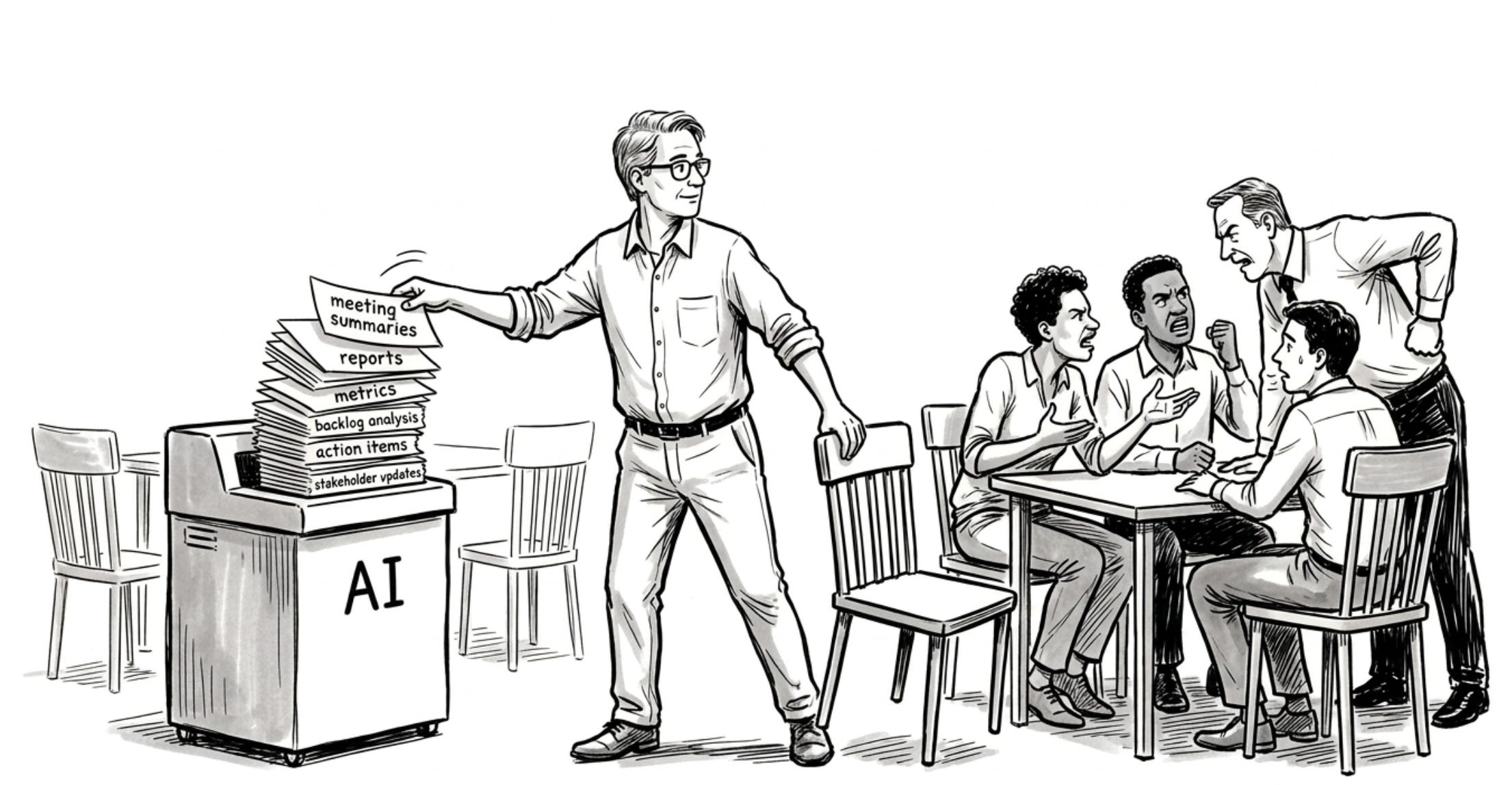
Q: “Hi Vibhor, I’m a Scrum Master and I’m seeing more AI tools being introduced for things like meeting summaries, backlog analysis, reporting, metrics, and even drafting retrospective insights. I’m wondering what this means for my role in 2026 and further. If AI can take over some of the administrative and analytical work, what skills should I focus on developing?”
This is a question I expect more Scrum Masters to ask over the next few years.
And I think it is an important one.
Because AI is not arriving at the edges of agile work. It is moving directly into activities that many Scrum Masters have traditionally spent a significant amount of time doing.
An AI tool can summarize a Daily Scrum.
It can turn a two-hour workshop transcript into action items
It can analyze a backlog and identify duplicate stories, unclear acceptance criteria, dependencies, and possible risks
It can generate sprint reports
It can identify patterns in cycle time, throughput, blocked work, and carryover
It can review six months of retrospective notes and suggest recurring themes
It can draft stakeholder updates
It can even suggest retrospective questions based on what happened during the Sprint
So I do not think Scrum Masters should dismiss the concern by saying:
“AI can never replace the human element.”
That answer is too easy, and I hear this all the time. I used to believe it too.
In my opinion, the question we now need to ask is this:
Which parts of Scrum Master work become less valuable when AI can perform them cheaply, quickly, and at scale? And which parts become more valuable?
And this is what we will discuss in this post.
Let’s get started.
Got an urgent question?
Get a quick answer by joining the subscriber chat below.
