
Stakeholder Management for Scrum Masters
Part 7 of my 7 part training series on Foundational Scrum Master skills

👋 Hello, I’m Vibhor, and welcome to the 🔒 subscriber-only edition 🔒 of my weekly Training Series powered by Winning Strategy. Also, every Sunday, I answer one reader question about Agile Products, Role-based Skills, and anything else that you need answered about your Career Growth. You can send me your questions here.
Note: If you enjoy reading this post, please show your support by clicking the little gray heart below the title above. It would really mean a lot and help spread the word about this growing newsletter. 😍
Let’s get started.
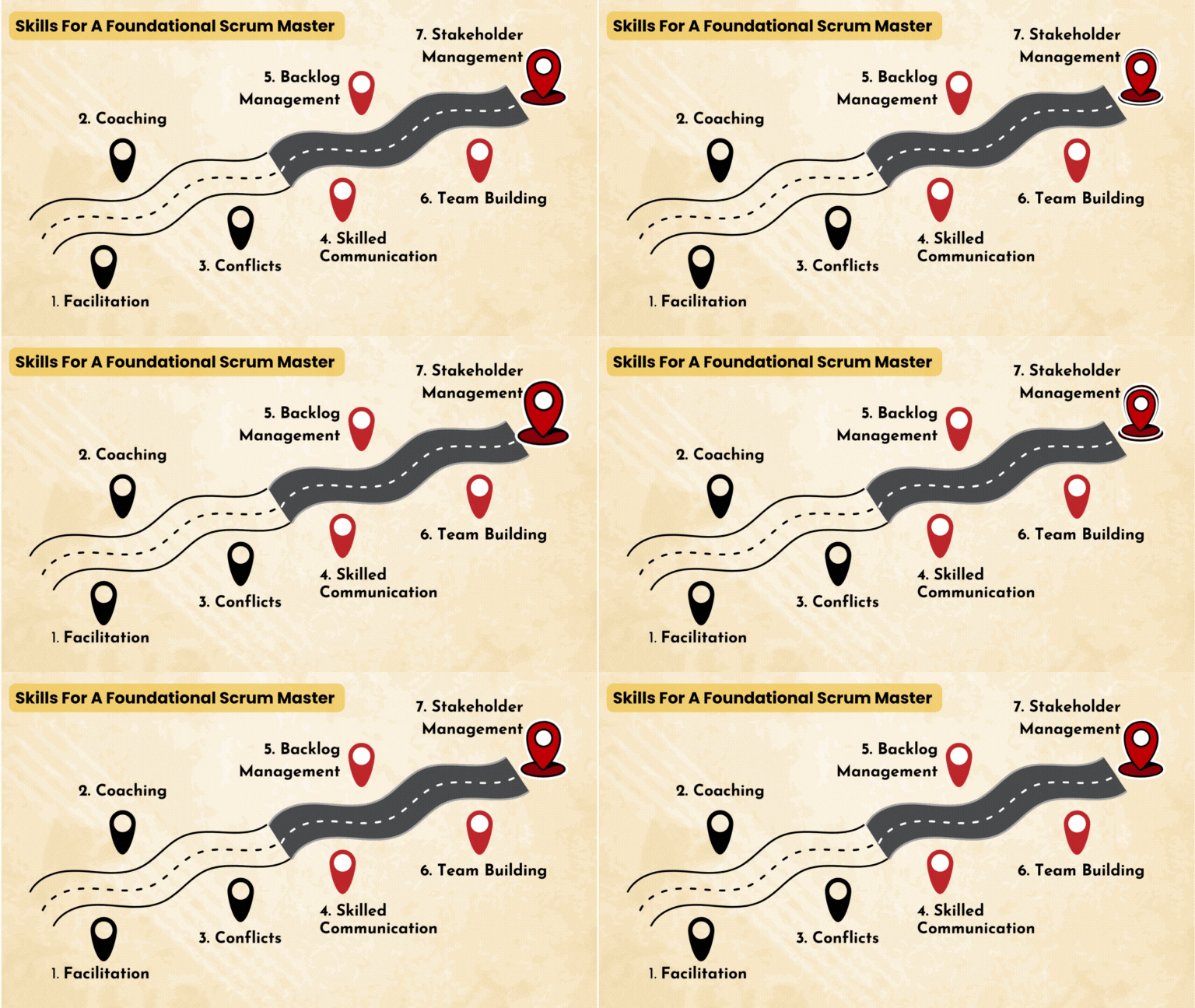
Welcome to part 7 of our series on Skills For A Foundational Scrum Master. Here’s where we are at:
Part 1: 9 Steps to master facilitation skills
Part 2: Coaching Model and Mindset For Scrum Masters
Part 3: How to approach and resolve team conflicts
Part 4: How to skillfully communicate with your team
Part 5: Backlog management skills
Part 6: High-performing team-building skills
Part 7: Skills to manage stakeholders ←Current post
This post focuses on the Scrum Master's role and responsibilities in Stakeholder Management.
Introduction to Stakeholder Management
Let’s start from the beginning!
I want you to think of stakeholders as the people who have a vested interest in the product or project you’re working on. These could be end users, the sponsors funding the project, the team members creating the product, or even other teams that your work might affect. Everyone's got some skin in the game.
You might wonder,
"Why is managing stakeholders such a big deal?"
To understand that correctly, I want you to visualize trying to make dinner for a group of friends without knowing their dietary preferences, allergies, or even if they're hungry. It would be chaotic, right?
In our world, i.e. Scrum, stakeholder management is about understanding these "preferences," ensuring everyone is on the same page, and steering the ship in a direction that everyone (mostly) agrees on.
Effective stakeholder management is important for the success of your product/project. Without it, misunderstandings could arise, critical feedback might get missed, and your team could build something nobody wants or needs. By actively engaging with stakeholders, your team doesn’t just avoid these pitfalls; it also taps into a big pool of insights, ideas, and expertise.
Role of a Scrum Master in Stakeholder Management
Now let’s go a little deeper into what Stakeholder Management really involves and where your role as a Scrum Master fits in.
Stakeholder Management has five main components.
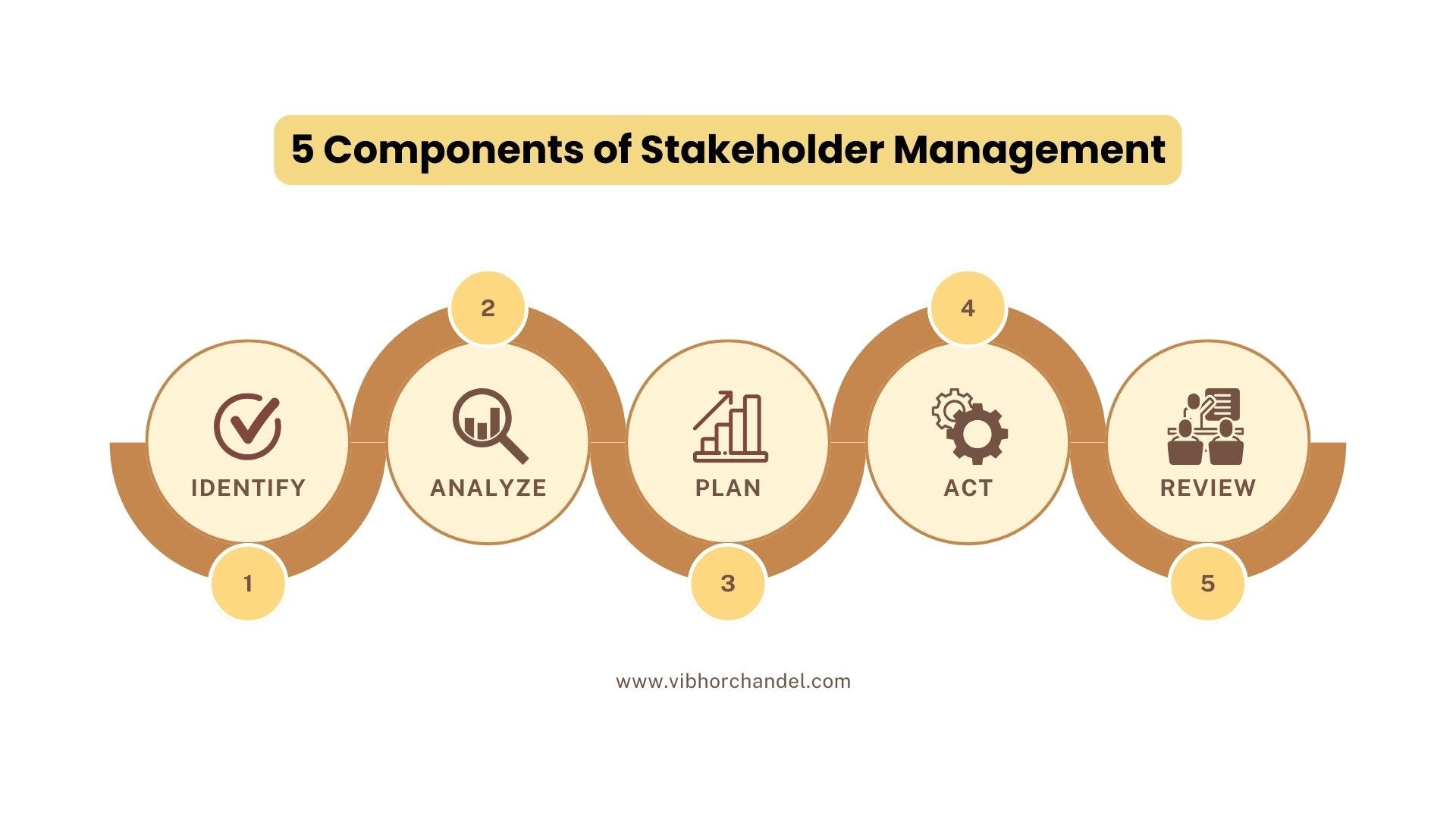
Identify:
Identifying Stakeholders: Recognizing who’s involved and affected by the product/project.
Analyze:
Understanding Stakeholder Needs: Finding their requirements, expectations, and motivations.
Prioritizing Stakeholder Requests: Assessing the weight and importance of different stakeholder requests to understand which ones are critical and which can be deferred.
Plan:
Setting Clear Communication Channels: Laying out the framework for communicating with stakeholders, ensuring clarity and consistency.
Educating Stakeholders: Informing stakeholders about processes and the reasoning behind decisions to set the right expectations.
Act:
Engaging Stakeholders Regularly: Actively involving them, gathering their feedback, and incorporating it into the product/project.
Reporting Progress: Keeping stakeholders updated with the latest project status and developments.
Resolving Conflicts: Taking immediate action when disagreements or misunderstandings arise, ensuring the project stays on track.
Review:
Re-evaluating Stakeholder Engagement: Post-implementation or after significant milestones, assessing the effectiveness of stakeholder engagement and making adjustments as necessary.
Who’s Responsible/Accountable for What?
In the Scrum framework, each team member has a specific role to play. Although we all work together, each role comes with distinct responsibilities. When it comes to Stakeholder Management, each role tends to focus on specific components more closely.
Let's take a closer look at how these responsibilities and accountabilities are typically divided:
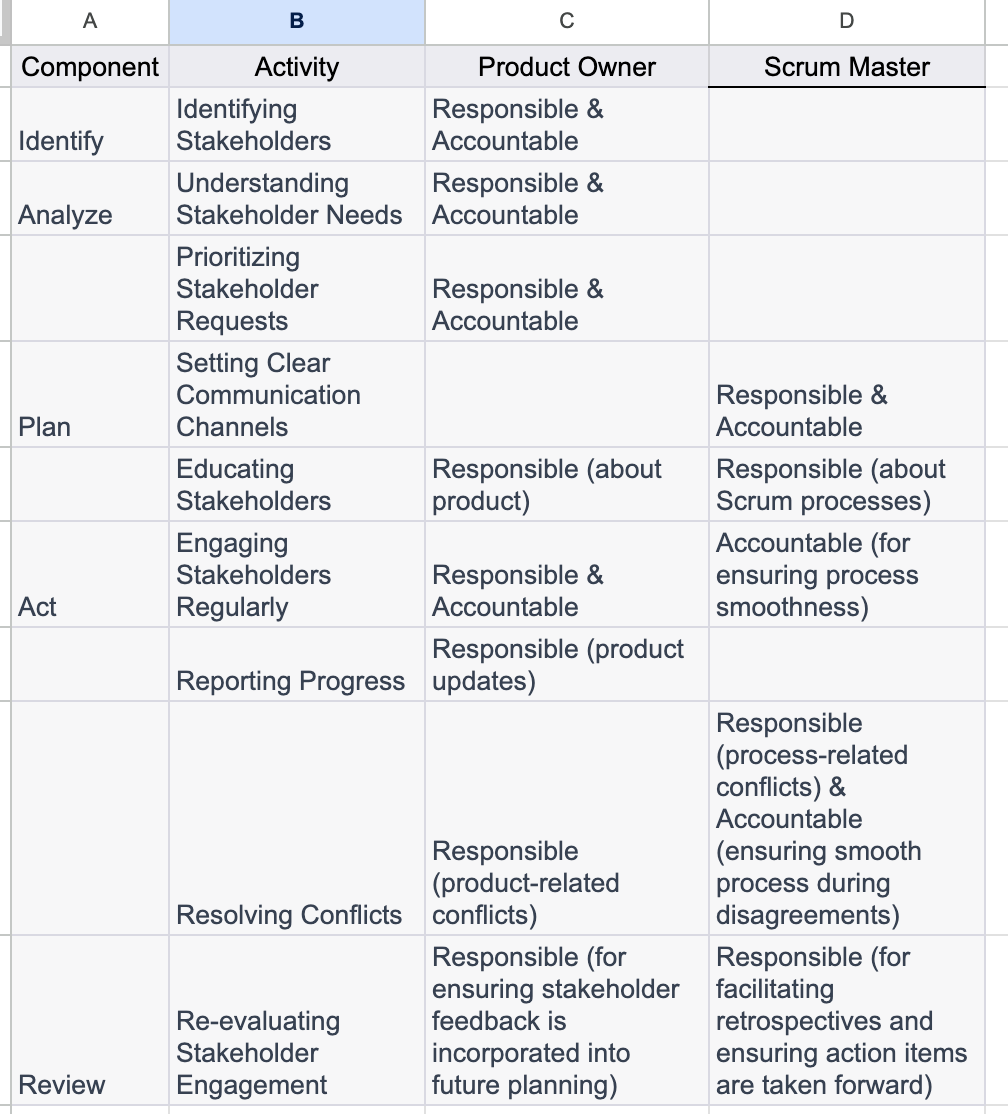
Let’s elaborate on each component.
Identify:
Responsible: Product Owner. The PO has the primary responsibility for identifying the key stakeholders since they represent the interests of these stakeholders and ensure that the product delivers value to them.
Accountable: Product Owner. While others might help in the identification, the PO is ultimately accountable for ensuring the right stakeholders are involved.
How can you (Scrum Master) help in this component? You can help by facilitating sessions to brainstorm and identify potential stakeholders.
Analyze:
Responsible: Product Owner. The PO is responsible for the needs and requirements of stakeholders, and for understanding their priorities.
Accountable: Product Owner. Again, the PO holds the final say on product decisions based on stakeholder needs and product vision.
How can you (Scrum Master) help in this component? You can help by supporting in setting up sessions with stakeholders, ensuring the team understands the importance of stakeholder feedback. You can also facilitate prioritization sessions.
Plan:
Responsible:
Setting Clear Communication Channels: Scrum Master. The SM facilitates communication processes within the team and with stakeholders.
Educating Stakeholders: Both Scrum Master (about Scrum processes) and Product Owner (about product vision and backlog).
Accountable:
Scrum Master is accountable for ensuring that communication channels are effective and that the team understands the value of stakeholder engagement.
Product Owner is accountable for ensuring stakeholders understand product goals, backlogs, and priorities clearly.
Act:
Responsible:
Engaging Stakeholders Regularly: Product Owner. The PO often takes the lead in stakeholder engagement sessions such as Sprint Reviews.
Reporting Progress: Product Owner primarily (for product updates), but the Development Team also shares updates during Sprint Reviews.
Resolving Conflicts (related to the product): Product Owner. For conflicts related to the process, the Scrum Master steps in.
Accountable:
Both the Product Owner and the Scrum Master share accountability in this phase, with the PO being accountable for product-related decisions and the SM for ensuring a smooth process.
Review:
Responsible:
Re-evaluating Stakeholder Engagement: This is a shared responsibility. The Scrum Master ensures that retrospectives are held and that stakeholder feedback is discussed. The Product Owner and Development Team participate actively in these discussions.
Accountable: Scrum Master for facilitating the retrospective and ensuring action items are taken forward. Product Owner for ensuring stakeholder feedback is incorporated into future planning.
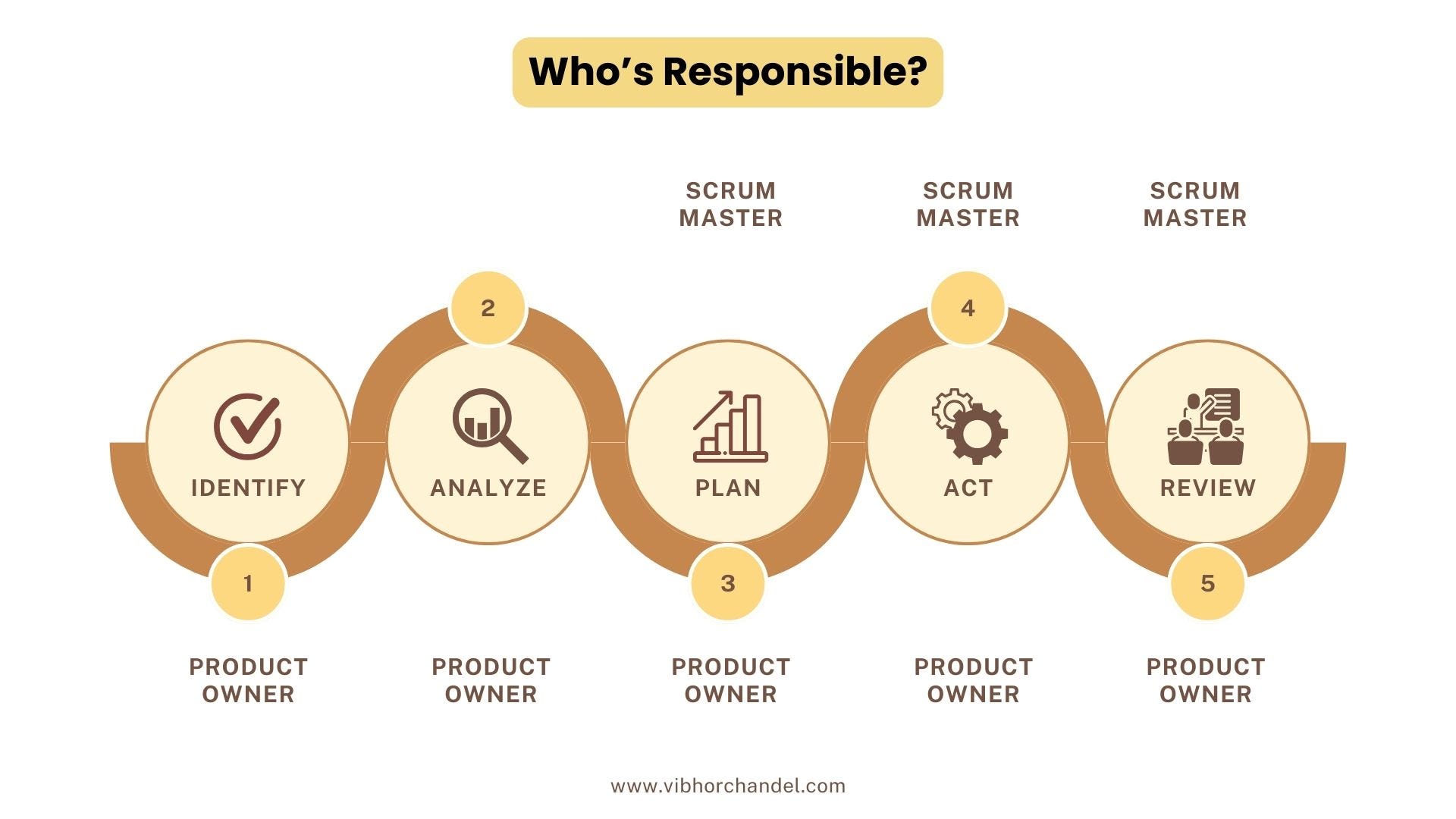
In a nutshell, when it comes to Stakeholder Management, you, as a Scrum Master, focus primarily on the following 4 responsibilities:
Engaging Stakeholders Regularly: Regular communication is at the core of Scrum. You ensure that stakeholders are consistently involved, especially during important events like Sprint Reviews.
Educating Stakeholders: You ensure everyone understands the Scrum process, promoting clarity in the objectives.
Setting Clear Communication Channels: Keeping everyone updated and on the same page is crucial. You help streamline communication, ensuring everyone is informed, and their feedback is captured.
Resolving Conflicts: Projects can be dynamic, and differences in opinions or misunderstandings can arise. You step in to help smooth things over, facilitating discussions and ensuring we find a way forward.
While the broader team is involved in stakeholder management, your role is to ensure that the relationship between the team and stakeholders remains positive, transparent, and productive. You act as a facilitator and guide.
How to fulfil these four responsibilities?
Here are some suggestions for seamlessly integrating your above four responsibilities into your daily routine as a Scrum Master. It's essential to make these practices feel natural rather than forced. Here's how:
Engaging Stakeholders Regularly:
Scheduled Check-ins: Block a regular time slot in your calendar, maybe 15 minutes every other day, to chat with different stakeholders. Rotate whom you speak with so that you connect with all of them over time. This doesn't have to be a formal meeting – a simple 'How are things going?' can often suffice. Here’s a handy template.
During Sprints: Maintain a list of all stakeholder feedback. Incorporate that feedback within your daily Scrum meetings. Encourage your team to share any stakeholder feedback they might have received.
Sprint Reviews: Use this as an opportunity for structured stakeholder engagement. This is where they can see the product increment and provide real-time feedback. Ensure they are invited and encouraged to attend and participate.
Educating Stakeholders:
Onboarding: Whenever a new stakeholder gets involved, arrange a brief orientation session about Scrum processes. It could be a simple presentation or a 1:1 chat.
Engagement in Events: Invite stakeholders to occasional Daily Scrums or other Scrum events (not just Sprint Reviews). Let them see the process in action firsthand.
Quick Guides and Resources: Create or share concise, easy-to-digest resources about Scrum. This could be a one-pager FAQ. Having these at their fingertips can be invaluable for stakeholders.
Setting Clear Communication Channels:
Start of a Sprint: Establish the primary modes of communication. It can be emails, chat platforms, or face-to-face. Decide early and communicate it.
Centralized Platforms: Utilize tools like Slack or Microsoft Teams to create specific channels for projects or discussions. Having a ‘Stakeholder Updates’ channel can be invaluable where you, the team, and even stakeholders drop in updates or important notices.
Visual Boards: Use physical or digital boards (e.g., Trello, Miro) to display the sprint progress. Encourage stakeholders to view it and perhaps even add their own comments or questions directly on the board.
Resolving Conflicts:
Address Immediately: As soon as you sense a disagreement, tackle it head-on. A short, impromptu meeting (even just 5-10 minutes) can sometimes resolve matters before they escalate. Don’t forget to take the PO with you in such meetings.
Mediation Sessions: For deeper conflicts, act as a mediator between the team and stakeholders. Ensure that these sessions are in a neutral setting and keep the focus on finding common ground.
Feedback Loops: After resolving a conflict, gather feedback from the involved parties. What worked? What didn’t? Use anonymous tools like SurveyMonkey if needed.
For in-depth Conflict Resolution skills, look at the following post —

Not-To-Dos when engaging with stakeholders
As a Scrum Master, it can be easy to unintentionally make mistakes when it comes to managing stakeholders. Here are some common pitfalls that you'll want to avoid:
Isolate the Team: Sometimes, Scrum Masters can become so focused on protecting their team from distractions that they end up creating a barrier that prevents the team from collaborating effectively with stakeholders.
Avoid Difficult Conversations: Sometimes Scrum Masters might feel hesitant to bring up difficult topics or deliver negative news because they don't want to cause conflict or upset their team members or stakeholders.
Bypass the Product Owner: Sometimes, Scrum Masters may communicate or make decisions with stakeholders without involving the Product Owner. This can end up confusing the priorities and sidelining the Product Owner unintentionally.
Neglect Regular Check-ins: As humans, we tend to believe that silence is a sign of things going well, but as a Scrum Master, it's important to stay in touch with stakeholders regularly to make sure everyone is on the same page and that expectations are being met.
Limit Stakeholder Education: Sometimes, Scrum Masters might focus so much on the development team that they forget to educate stakeholders about the Scrum processes. This can lead to misunderstandings and confusion. It's important to remember that everyone involved in the project should have a clear understanding of how Scrum works and how it can benefit the team.
Take Sides in Conflicts: Sometimes, when we try to sort out problems or disagreements, we might unknowingly show partiality towards one side, which can put the Scrum Master's position as an impartial mediator in jeopardy.
Rely Solely on Formal Meetings: Sometimes Scrum Masters may only engage with stakeholders during scheduled Scrum meetings, which means they might miss out on other opportunities to connect with them in a more casual and informal setting. These less formal interactions can be just as important and valuable as the more structured meetings.
Further reading
Stakeholders are easier when the groundwork is done:
This is it 🙏
If there's one thing I hope you take away, it's this:
While the tools and techniques matter, the heart of stakeholder management lies in building relationships. Every check-in, every educational moment, and every piece of feedback is an opportunity to strengthen these bonds.
If you have any questions (related to this topic), don’t forget to use the comments section to ask.
Or you can always email me at winningstrategy@vibhorchandel.com
🙋🏻♂️ Your Questions!
If you want me to answer your questions in this newsletter, please send them my way using this link - Send me your questions.
If you’re finding this newsletter valuable, consider sharing it with friends or subscribing if you aren’t already.
Till next week!
Sincerely,
Vibhor 👋
P.S. Let me know what you think! Is this useful? What could be better? I promise you won’t hurt my feelings. This is an experiment, and I need feedback. You can reply to this email to send your message directly to my inbox.

“I share things I wish I knew in the starting years of my career in the corporate world."
Vibhor Chandel